
Commercial Solar for Warehouses & Distribution Centers
Michigan’s Trusted Partner for Warehouse and Logistics Solar
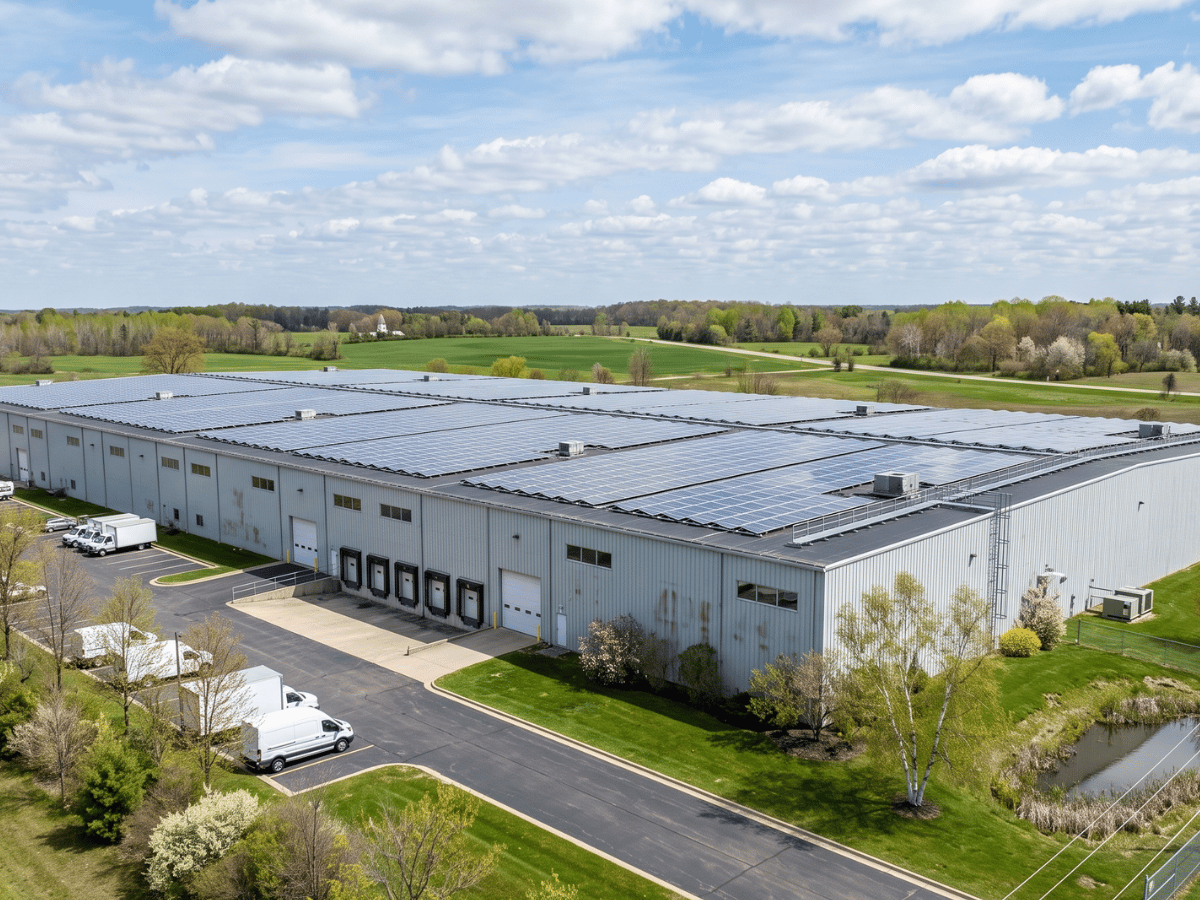
Your warehouse roof is the largest unused asset your business owns. Rooftop solar turns that idle square footage into on site power, lowers your energy and demand costs, and locks in predictable operating expense for decades.
80+ Reviews
Pearl Certified & Michigan Saves Authorized
Award Winning Solar Installer

Turn Your Warehouse Roof Into a Revenue Producing Asset
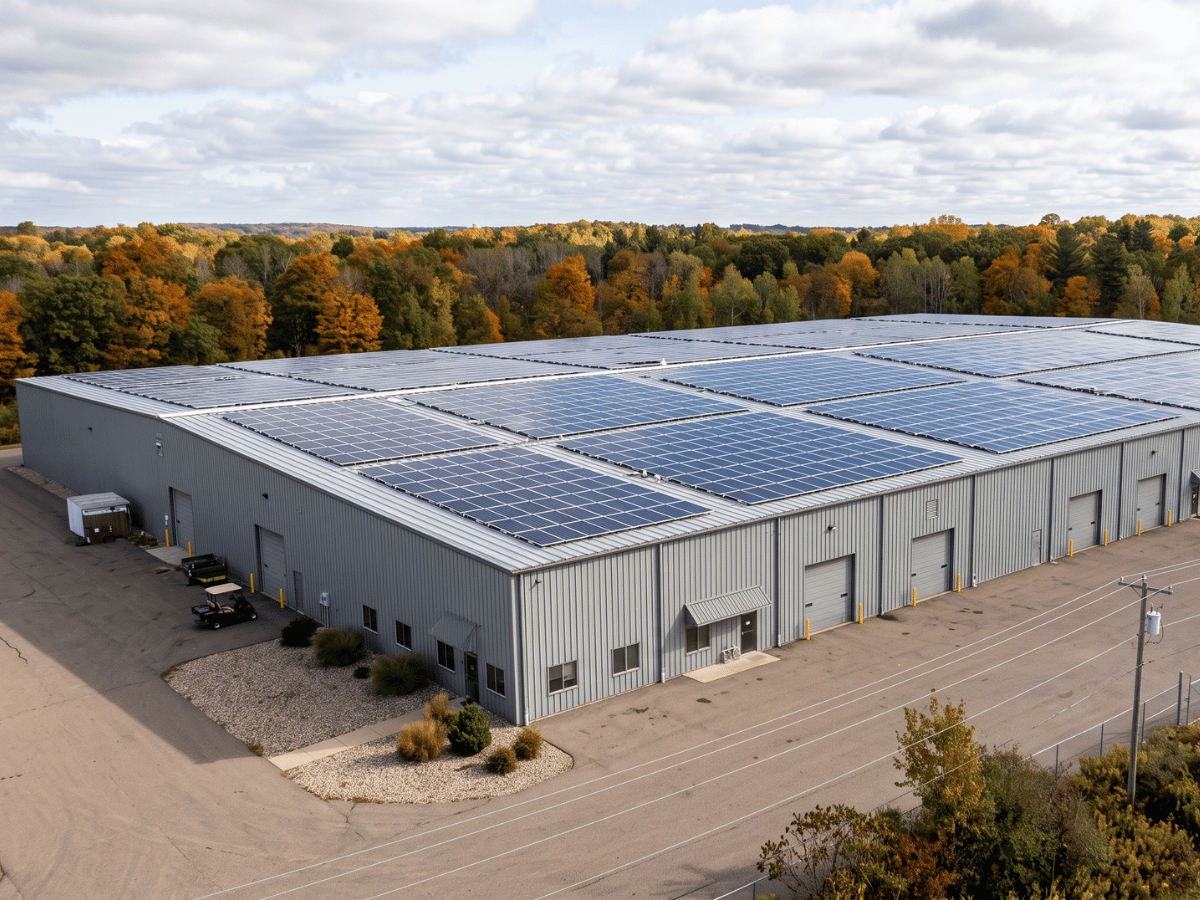
Warehouses and distribution centers are among the best buildings in Michigan for solar, and most of them are sitting on acres of unused roof. High bay lighting runs long hours. HVAC and dock equipment pull hard through the day. Material handling, conveyors, chargers, and compressors add steady load on top of that. All of it peaks during daylight, which is exactly when a rooftop array produces the most power.
That alignment is what makes the math work. Every kilowatt hour your system generates is a kilowatt hour you do not buy from DTE Energy or Consumers Energy, and because your usage and your production happen at the same time of day, most of what you generate gets consumed on site. Commercial solar installation is at the core of what we do, and warehouse and logistics projects are some of the most straightforward, highest return work we take on.
Why Michigan Warehouses Are Ideal for Commercial Rooftop Solar
Unused Roof Space
A large flat roof is the best mounting surface in commercial solar. No slope complications, no shading, and enough contiguous area to size a system that actually moves your bill.
Load That Matches Production
Warehouse operations run when the sun is up. Lighting, HVAC, dock doors, and conveyors draw hardest during the exact hours your array produces most.
Lower Demand Charges
Commercial bills are driven by your highest peak, not just total usage. Solar shaves peak daytime consumption, and battery storage can cut demand charges further.
Predictable Operating Costs
Solar trades a rising, unpredictable utility bill for costs you can plan around, which protects your operating budget for 25 plus years.
Cold Storage Sees More
Refrigeration, freezers, and continuous process equipment mean a heavier, steadier load profile, which generally means a larger system and a stronger return.
Built for Michigan Conditions
Every array is engineered for Michigan snow load and laid out around drains, walkways, skylights, and rooftop equipment from the start.
Solar Solutions for Warehouse and Distribution Facilities
We design every system around your roof, your load profile, and your operating constraints. Most warehouse projects start on the roof, but the right answer often combines more than one approach.
1
Rooftop Solar Arrays
Ballasted racking on flat membrane roofs avoids penetrations and protects your roof warranty.
2
Solar Carports and Canopies
Employee and fleet parking generates power while providing covered parking when roof area is limited.
3
Ground Mounted Systems
Unused perimeter land is often the most cost effective option per watt and can be sized larger than roof alone.
4
Battery Storage for Demand Management
Discharge during peak windows and hold critical systems up during an outage.
5
EV and Fleet Charging
As delivery and yard fleets electrify, EV charging powered by your own solar keeps fuel costs on site.
How Michigan Warehouses Pay for Solar
Solar is a capital decision, so it should be evaluated like one. We build the model around your actual utility bills and rate structure, not a generic estimate.
The Return
Strong ROI & Payback
Commercial solar typically reaches payback in roughly 10 to 14 years in Michigan, followed by decades of essentially free generation. Heavy daytime load lands at the faster end.
Flexible Ownership
Cash, Loan, or Financed
Own outright for the strongest lifetime return, or spread the cost so the project stays cash flow positive from year one. We can model each path to show your options.
Michigan Program
Michigan Saves Financing
As an authorized Michigan Saves contractor, we connect Michigan businesses with clean energy financing built for our state.
Rural Eligible
USDA REAP Grants
Facilities in rural eligible areas may qualify for solar grants that offset a meaningful share of project cost. We help identify eligibility and pursue it.
At Your Pace
Phased Installation
A large roof does not have to be filled at once. Phase across roof sections or multiple sites so it fits your capital plan.
The Simple Case
Predictable Energy Costs
Solar trades a rising, unpredictable utility bill for costs you can plan around, which protects your margins for decades.
See What Your Warehouse Roof Could Produce
Send us a recent utility bill and we will model your roof, your load, and your rate structure, and show you real production and savings numbers at no cost.
Get a Free Solar Assessment →What We Check Before Designing a Warehouse System
Warehouse projects live or die on a few technical details. We work through these up front so there are no surprises after the contract is signed.
Roof Condition & Remaining Life
If your roof needs replacement within a few years, it is far cheaper to re roof before installing. We assess honestly and will tell you to wait if that is the right call.
Structural Load Capacity
Solar adds weight. Most modern warehouses handle it without modification, but older buildings sometimes need reinforcement. We verify before finalizing any design.
Membrane & Attachment
TPO and EPDM work well with ballasted systems requiring no penetrations. Older built up roofs may need a different approach. We match the method to your roof.
Drainage & Roof Equipment
A usable layout works around drains, walkways, skylights, HVAC units, and fire code setbacks. Real usable area is almost always less than total roof area.
Ownership & Lease Structure
If you are a tenant, an owner occupant, or a landlord with triple net leases, the right structure differs. We sort out who invests and who benefits before engineering.
Rate Schedule & Demand Profile
We review twelve months of billing to see how much of your bill is demand driven, which determines whether storage belongs in the design.
Our Turnkey Process for Warehouse Solar Projects
1
Utility Bill & Load Analysis
We review at least twelve months of billing to understand consumption, rate schedule, and demand charges. This is where we find what solar is actually worth to your facility.
2
Roof Assessment & System Design
We model your roof, verify structural and membrane conditions, and lay out a system around real usable area, with a 25 year model built on your own numbers.
3
Permitting & Interconnection
We handle municipal permitting and DTE or Consumers interconnection. Commercial interconnection takes longer than residential, and we manage that timeline.
4
Installation Around Operations
We schedule work to keep docks, staging areas, and traffic lanes clear. Most rooftop work happens above an operating facility with minimal interruption below.
5
Activation, Monitoring & Support
We commission the system, set up monitoring, and train your facilities team, backed by our 10 year workmanship warranty and ongoing local service.
Ready to see your numbers?
Send one utility bill and we will handle the rest.
Get Your Free Solar Estimate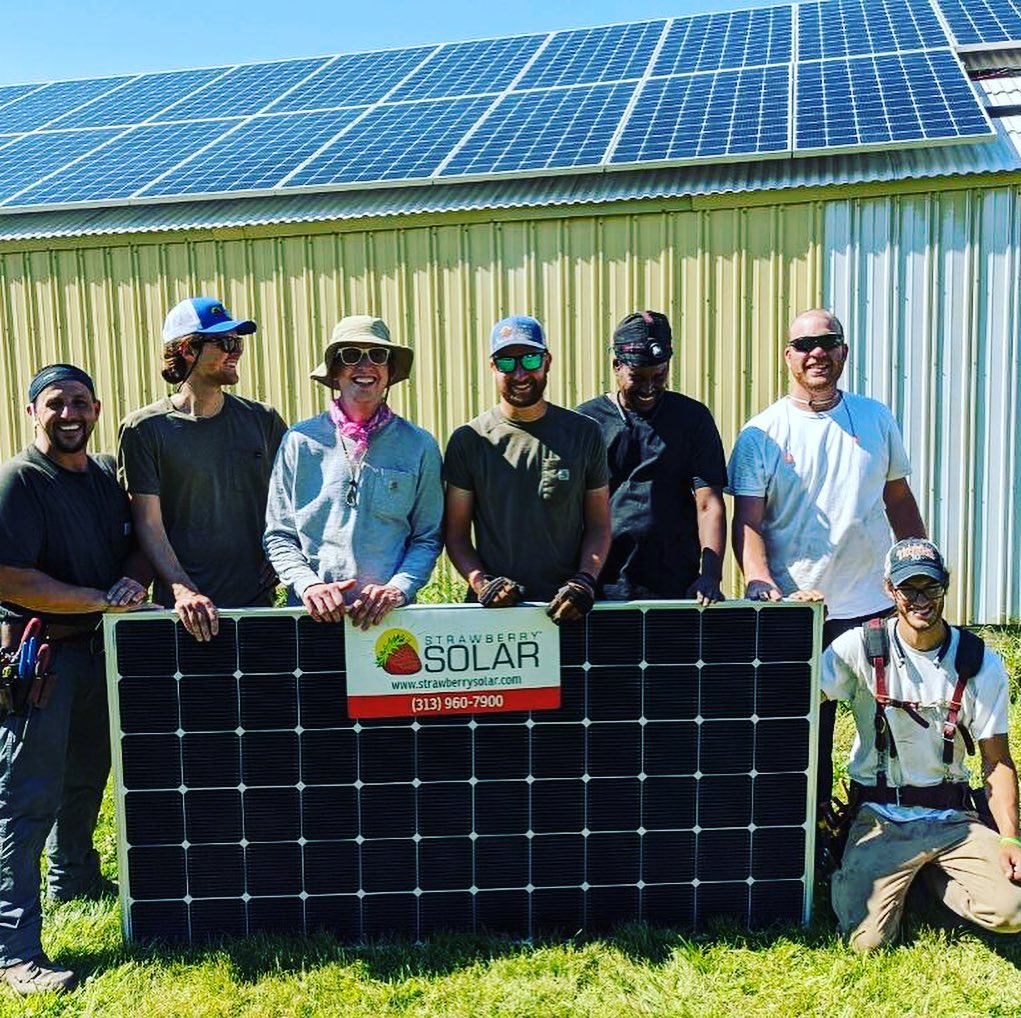
Why Michigan Warehouse Operators Choose Strawberry Solar
Local Michigan team since 2010. Detroit based, 15 plus years of experience, deep knowledge of DTE and Consumers territory.
Pearl Certified and Michigan Saves authorized. Credentialed and trusted for quality workmanship.
Manufacturer agnostic. We recommend the best fit equipment for your facility, not whatever we are told to sell.
Full turnkey service. Design, permitting, installation, interconnection, monitoring, and support under one roof.
Straight answers on feasibility. If your roof is not ready or the numbers do not work, we will tell you before you spend anything.
We only work with brands we trust and would install on our own homes. We do this to ensure that every customer is satisfied with their solar setup.










Frequently Asked Questions
It depends on your roof area relative to your load. Facilities with large roofs and moderate consumption can offset a substantial share of annual usage, while very high load operations like cold storage may offset less on a percentage basis but save more in absolute dollars. We model your specific building before quoting anything.
Solar reduces demand charges when your peak happens during daylight hours, which is typical for warehouse operations. Adding battery storage gives you more direct control, since the system can discharge specifically during peak windows. We look at your rate schedule to determine how much of your bill is demand driven.
If your roof has limited life remaining, we recommend re roofing before installation. Removing and reinstalling an array later is expensive, and pairing a new roof with a new system aligns their lifespans. We will tell you honestly where your roof stands.
Rarely in any meaningful way. Most work happens on the roof, above an operating facility. We coordinate staging, crane or lift access, and any brief electrical tie in work around your schedule and your dock activity.
Often yes, but the structure matters. Depending on lease terms and remaining tenure, the project may make more sense for the landlord, the tenant, or a shared arrangement. We help both parties understand the options before any engineering begins.
Yes. Panels operate more efficiently in cold temperatures, and snow typically slides off or melts clear on low tilt commercial arrays. We engineer every system for Michigan snow load and seasonal conditions.
Timelines vary with system size, permitting, and utility interconnection, and commercial interconnection is usually the longest stage. Most projects run several months from contract to activation. The physical installation itself is one of the quickest stages, ranging from a few days on smaller systems to a few weeks on large rooftop arrays.
That comes out of your utility bills and your usable roof area. We size systems to offset as much of your energy cost as makes financial sense without overbuilding beyond what your load and available space support.