
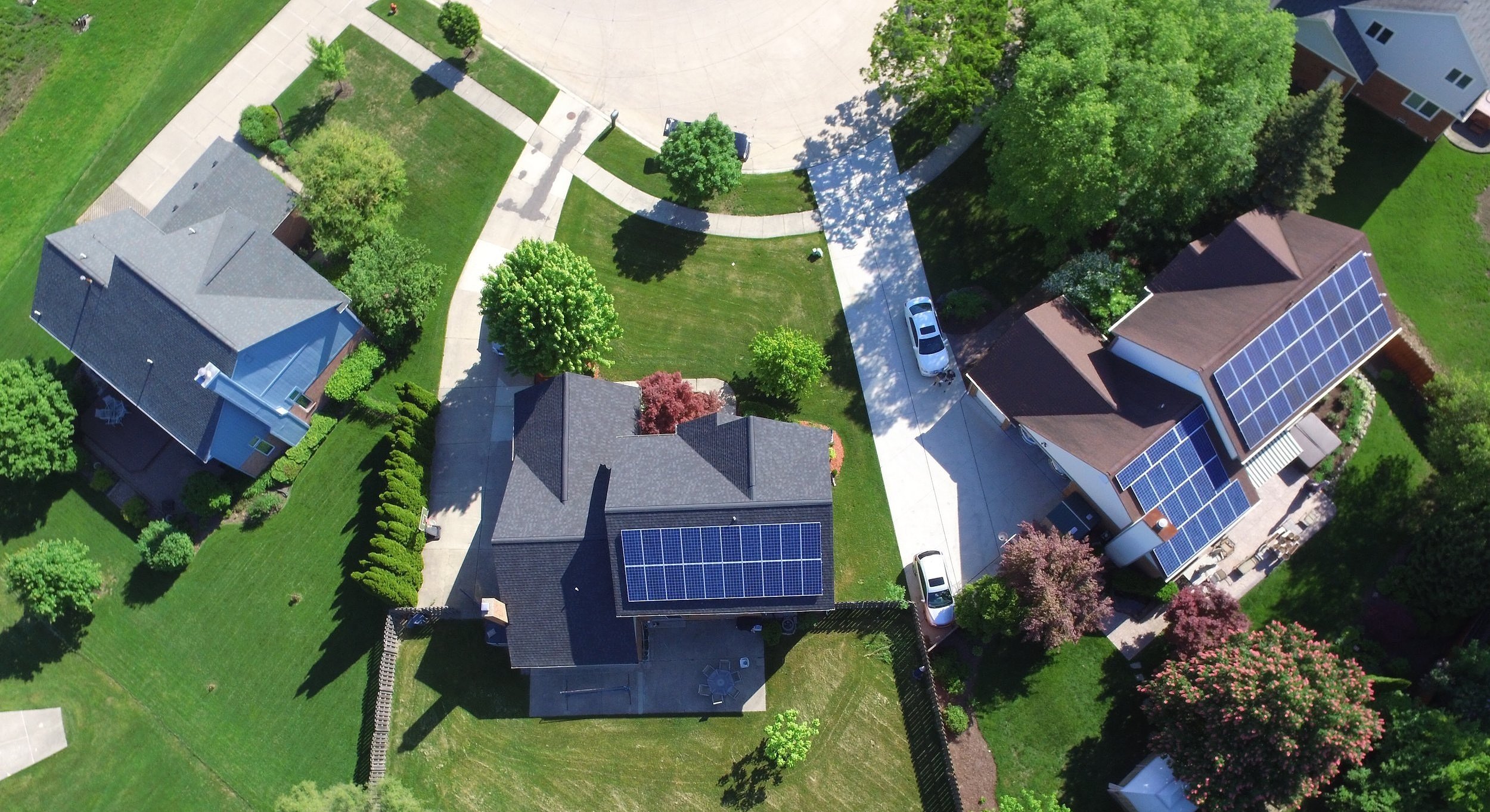
Whole-home FranklinWH-powered backup designed and installed in Michigan
Strawberry Solar is a certified FranklinWH installer. We design and install FranklinWH home battery systems across Michigan’s Lower Peninsula, on their own or as part of a new solar energy storage system.
FranklinWH is built for whole-home backup, which matters in Michigan. When an ice storm or a summer thunderstorm takes the grid down, the loads that count are the big ones: the furnace blower, the well pump, the sump pump, and the central air. A FranklinWH system is designed to carry them.
Certified FranklinWH Installer
Pearl Certified
Michigan Saves Authorized
BBB Accredited
Trusted Since 2010
Your home during an outage
Grid down
Furnace blower
On battery
Well pump
On battery
Sump pump
On battery
Central air
On battery
Refrigerator
On battery
Power from: aPower battery + solar, managed by aGate
Illustration only. With Smart Circuits, you choose which loads stay on and which shut off to stretch your reserve.

15 kWh
Usable storage per battery, aPower 2 or aPower S
10 to 11.5 kW
Continuous output, with 15 kW peak for 10 seconds
15 units
Maximum batteries per aGate, up to 225 kWh
15 years
FranklinWH warranty, or 60 MWh of throughput
Sources: aPower 2 datasheet, aPower S datasheet. An aPower 2 delivers 10 kW continuous; an aPower S delivers up to 11.5 kW when solar and battery supply the house together.
How the FranklinWH System Works
A FranklinWH system has two main parts, plus an optional third. The aPower battery stores energy, the aGate controller decides where that energy goes, and the aHub extends what the system can take on.
aPower, the battery
FranklinWH makes two batteries, the aPower 2 and the aPower S. Each stores 15 kWh and uses lithium iron phosphate (LFP) cells, a battery chemistry known for thermal stability and long cycle life. The aPower 2 is AC-coupled, so it connects to your home’s electrical system on the same side as your outlets and appliances and works alongside solar equipment you already own. The aPower S has a hybrid inverter built in, so panels connect straight to the battery.
aGate, the controller
The aGate manages your solar, the grid, your batteries, and a backup generator if you have one. When the grid goes down, it switches your home to available power automatically. It also runs Smart Circuits, which give you individual control over specific appliances so the essentials stay on longest.
aHub, the expansion (optional)
The aHub extends the system. It connects up to four 240 V Smart Circuits, which can be split into eight 120 V circuits, and adds interfaces for extra solar arrays, a generator, or a vehicle-to-load capable EV. Not every home needs one, and we will tell you if yours does.
Power to your circuits runs through the aGate, which is why the battery charges and discharges along the same pair of arrows rather than feeding the house on its own. The dashed line at the top is the one that changes with the battery: an aPower S takes solar directly, while an aPower 2 takes it through the aGate.
You see all of it in the FranklinWH app: what your panels are producing, how full your batteries are, and what your home is using.
What It Keeps Running When the Grid Goes Down
In most homes, a single 15 kWh battery can back up the whole house, whether that is an aPower 2 or an aPower S. On the aPower 2, that includes central air conditioners up to 5 tons.
That output is the reason we consider FranklinWH for Michigan homes. Motors like well pumps, sump pumps, and AC compressors draw a surge of power when they start, and either battery can deliver 15 kW for 10 seconds to handle that start.
The battery can also charge to full ahead of forecast severe weather, so it is ready before an outage starts. Homes that only need a few circuits covered have smaller solar battery storage options as well.
Smart Circuits: Choosing What Stays On
A FranklinWH system does not have to treat every circuit in your house the same way. Smart Circuits give you control over specific appliances, the power-hungry ones like an EV charger, an air conditioner, or a pool pump. You can schedule them to run at set times, such as off-peak hours, or shut them off to conserve stored energy and extend your backup time.
- Schedule heavy loads for the hours you choose
- Shut off what you do not need during an outage so the reserve lasts longer
- Control it from the FranklinWH App, on a schedule or on the spot
This is the part homeowners tend to use most after the system goes in. During a long outage, turning off an EV charger or a pool pump makes a meaningful difference in how long your stored energy will last when you need it.
For homes that need more of it, the aHub connects up to four 240 V Smart Circuits, which can be split into eight 120 V circuits, with scheduling and remote control through the app. The aHub also brings in extra solar arrays, a generator, or a vehicle-to-load capable EV through the same system. We work out during design which circuits are worth putting under that control.
Adding a Generator for Longer Outages
Some Michigan outages outlast a battery. Ice storms take down lines that crews cannot reach for days, and a stretch of gray winter weather limits how much your panels put back. That is where a generator earns its place alongside the battery rather than instead of it.
With the optional Generator Module, the aGate brings a generator into the system as another source. FranklinWH supports both standby and portable generators, and a portable unit needs to meet 240 V, 60 Hz. The generator powers your home and recharges the aPower battery at the same time, so you are not choosing between the two.
A standby generator can start and stop automatically based on your battery’s state of charge, with the thresholds set in the FranklinWH App, or you can start and stop it yourself from the app. In practice that means the battery carries the quiet hours and the generator runs only when it is needed, which stretches your fuel.
Generator sizing depends on how many aPower units you have and how much your household uses. We work that out as part of the system design, along with how your existing generator is wired today.
Sizing Your System: One Battery or More
The right number of batteries depends on two questions: what do you want to keep running? and for how long?
Essentials backup
Refrigerator, furnace blower, sump pump, well pump, lights, and internet. One battery handles this comfortably in most homes.
Whole-home backup
The house running close to normal, including central air and cooking. One battery covers this in most homes as well.
Stacked systems
Larger homes, an EV charger on the backed-up panel, or longer outages. Each aGate supports up to 15 batteries.
Battery icons are illustrative and do not represent a runtime or a recommended quantity.
We size every system from your actual electricity usage, pulled from your DTE Energy or Consumers Energy bills, rather than a rule of thumb.
aPower 2 or aPower S: Two Ways to Build the Same System
FranklinWH makes two 15 kWh batteries. They carry the same 15-year or 60 MWh warranty and run on the same aGate, and the difference is how your solar connects.
aPower 2
AC-coupled, so it works alongside solar equipment you already own and delivers 10 kW of continuous power. This is the usual choice when we are adding storage to an existing system, and it is what most retrofits in Michigan end up using.
aPower S
A battery with a hybrid inverter built in and four MPPTs, so panels connect straight to it. It delivers up to 11.5 kW of continuous power when solar and battery supply the house together, and 10 kW on battery alone. It also has a built-in heating blanket for cold-weather operation, which matters in a Michigan winter.
The two are designed to work together. An aPower S can be AC-coupled with aPower 2 units to add capacity and power later, so starting with one does not lock you out of the other. Your proposal names the exact model we are designing around.
Where FranklinWH Fits
Adding a battery to existing solar
Because the aPower 2 is AC-coupled, it can typically be added to a solar system you already have without replacing your inverter. We start by checking that your current system is performing the way it should, the same review we run in our solar system diagnostics service.
New solar plus storage
Designing the panels and the battery together lets us size a home solar installation and its storage around how your household actually uses power.
Off-grid and rural properties
FranklinWH batteries are off-grid ready, they stack for larger reserves, and the aGate brings in a generator as another power source. That combination suits off-grid solar systems on properties with no utility service or an expensive line extension.
Pairing FranklinWH With a SPAN Panel
We install both FranklinWH systems and SPAN smart electrical panels, and the two work together. With a SPAN panel, you can see and control power use circuit by circuit, which gives you finer control over what your battery powers during an outage and how long your reserve lasts.
Getting More From Your Solar Under Michigan Billing
DTE Energy and Consumers Energy customers with solar are billed under distributed generation. Under this structure, power you pull from the grid (inflow) is billed at your regular rate, and extra solar power you send back to the grid (outflow) is credited at a lower rate than what you pay for power you buy.
That is where a solar battery becomes valuable. Instead of sending solar energy to the grid at the lower credit, a FranklinWH system can store it and power your home during lower generation times, when you would otherwise be buying power at the full rate.
Inflow
Power you buy, at your regular rate
Outflow
Solar you export, credited lower
Stored
Solar you keep and use at night
How We Choose Equipment, and Why FranklinWH Makes the List
We are not tied to any manufacturer, so every system we design starts with your home rather than a product line. FranklinWH is one of the systems we install, and we recommend it where its strengths match the home: high-demand loads like central air and well pumps, generator pairing, off-grid designs, and adding storage to existing solar.
We only work with brands we trust and would install on our own homes. We do this to ensure that every customer is satisfied with their solar setup.













For other homes, a different battery is the better fit. We also install Tesla Powerwall and Enphase systems, and we will walk you through why we are recommending one for your home.
Why Michigan Homeowners Work With Strawberry Solar
We have been installing solar and battery systems for Michigan homes since 2010. As a certified FranklinWH installer, our team is trained on the equipment we put in your home.
Every battery project runs through our solar installation process, from system design through permitting and switching the system on.
We handle permitting. We manage the full permitting process on your behalf.
Two warranties, kept separate. FranklinWH covers the battery with its 15-year warranty, and Strawberry Solar backs the installation itself with our own 10-year workmanship warranty.
Support after install. We offer ongoing monitoring, troubleshooting, and support once your system is running.
Financing through Michigan Saves. We are an authorized Michigan Saves contractor, and solar financing may be available through Michigan Saves.
FranklinWH FAQs
In most homes, one 15 kWh battery covers whole-home backup. Larger homes, homes that want to back up an EV charger, and properties planning for longer outages may need two or more. We size your system from your actual usage history before recommending a number.
In most cases, yes, and this is where the aPower 2 fits. It is AC-coupled, so it connects on your home’s AC side and can typically be added without replacing your existing inverter. We confirm compatibility with your specific equipment before quoting.
Yes. With the optional Generator Module, the aGate brings a generator in alongside solar, the grid, and your batteries, and switches between them automatically. Both standby and portable generators are supported, and a portable unit needs to meet 240 V, 60 Hz. The generator can power your home and recharge the battery at the same time, and a standby unit can start and stop on its own based on your battery’s state of charge.
Both the aPower 2 and the aPower S carry a FranklinWH warranty of 15 years or 60 MWh of throughput. Separately, Strawberry Solar provides a 10-year workmanship warranty on the installation.
Both are 15 kWh FranklinWH batteries that work with the aGate and carry a warranty of 15 years or 60 MWh of throughput. The aPower 2 is AC-coupled, which suits homes adding storage to solar they already have. The aPower S has a hybrid inverter and four MPPTs built in, so panels connect directly to it, and it delivers up to 11.5 kW of continuous power with solar and battery together. The two can be combined in one system. Your proposal will name the exact model we are designing around.
Smart Circuits let you control specific appliances on their own, scheduling them or shutting them off during an outage to make your stored energy last longer. The aGate supports Smart Circuits directly. The aHub is an optional expansion that adds up to four 240 V Smart Circuits, which can be split into eight 120 V circuits, along with interfaces for more solar, a generator, or a vehicle-to-load capable EV.
The aPower 2 is rated for indoor or outdoor installation, can mount on a wall or the floor, and carries an IP67 rating on its battery pack and inverter. Its operating range is -4 °F to 122 °F. Michigan cold snaps can drop below that range, so we factor it into where the unit goes, such as an attached garage or a basement. The aPower S has a built-in heating blanket for cold-weather operation, which is one of the things we weigh when the battery has to live outdoors.
Ready to See What FranklinWH Looks Like for Your Home?
Tell us about your home and your backup goals, and we will design a system around them.
or call