
Solar for New Construction
Michigan’s Solar Partner for Builders, Developers, and New Builds
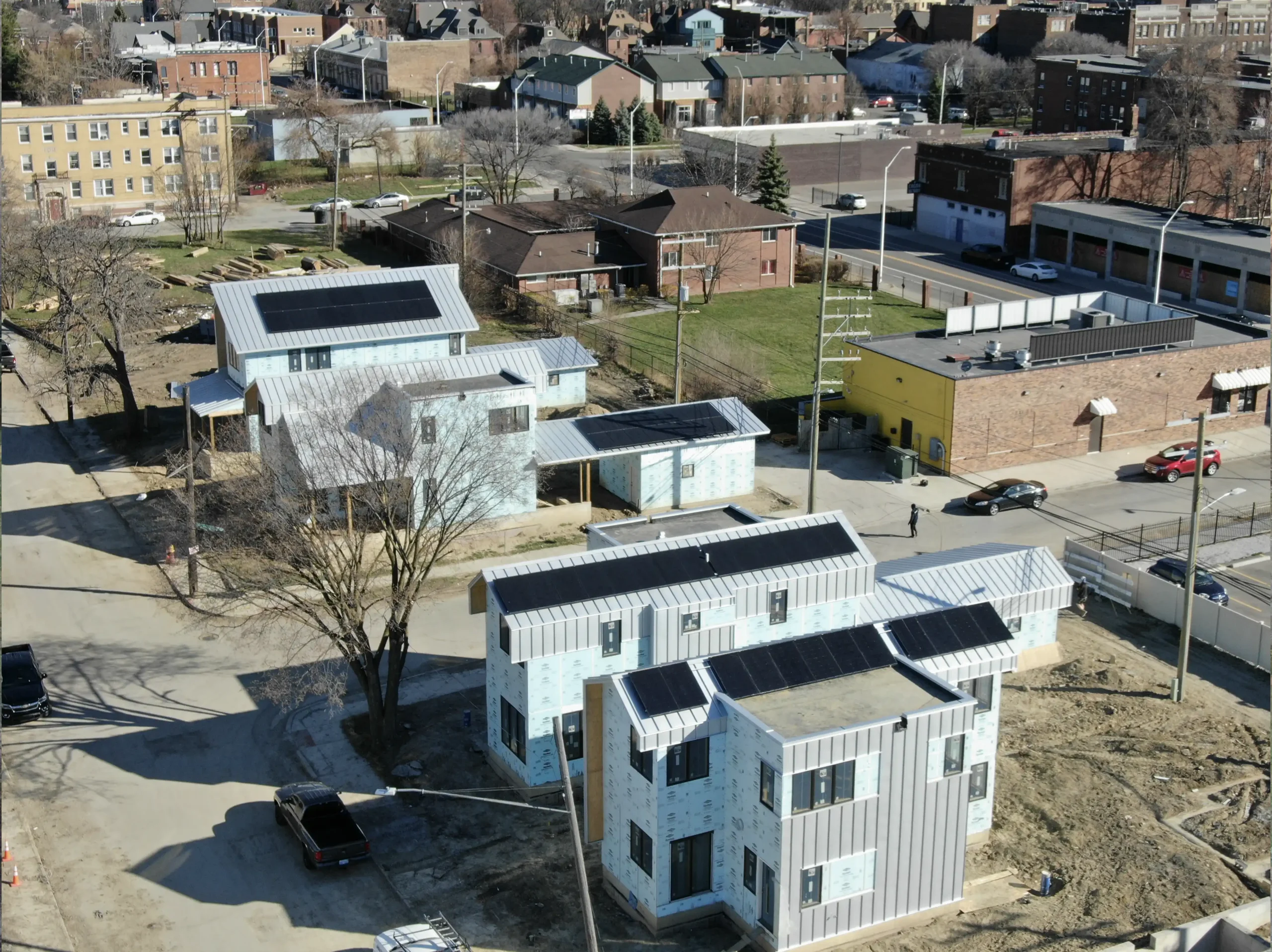
Every solar decision is cheaper before the drywall goes up. Designing solar into a new home or building means hidden wiring, a roof planned around the array, and electrical capacity sized right the first time, instead of paying to open up finished work later.
80+ Reviews
Pearl Certified & Michigan Saves Authorized
Award Winning Solar Installer



Design Solar In From the Start
Adding solar to a finished home or building means working around decisions that were already made. The roof is done, the walls are closed, the service panel is sized for the loads someone guessed at two years ago. Every one of those adds cost and limits what the system can do.
New construction removes all of it. Conduit runs inside the wall instead of down the outside of the house. Vents and chimneys get placed where they do not shade the array. The service panel gets sized once for solar, a battery, and an EV charger together, instead of being upgraded later. The work happens while the trades are already on site and the equipment is already there.
Strawberry Solar has designed and installed systems across Michigan’s Lower Peninsula since 2010. Commercial solar installation is at the core of what we do, and we work with builders, developers, and owners to get solar right while the plans are still on paper.
How New Construction Projects Benefit from Solar
Wiring and Equipment Stay Out of Sight
Conduit runs from the electrical room to the attic inside the wall cavity. Inverters and the main service panel get located during planning rather than mounted wherever there happens to be room. The finished building looks like the array was always part of it, because it was.
A Roof Designed Around the Array
Roof angle and direction get mapped for sun exposure while your architect is still drawing. Vent pipes, chimneys, and stack penetrations get clustered clear of the panel space, which means uninterrupted roof area, fewer obstructions, and better production from the same square footage.
Electrical Capacity Sized From Day One
Panel capacity and service sizing get set for what the building will actually carry, including heat pumps, EV charging, and battery storage. That avoids a service upgrade two years after occupancy, which is exactly the kind of cost nobody budgets for.
Permitting Handled Alongside the Build
Solar permitting in Michigan varies by municipality, and a new build is already going through that building department. We handle the solar permitting and the DTE Energy or Consumers Energy interconnection so it moves with your project instead of becoming a separate process months later.
Match your roof to your panels.
Solar panels are built to produce for 25 years or more. If the roof under them wears out first, someone pays to remove the array, redo the roof, and reinstall. Choosing a long-life roofing material during construction, such as standing seam metal, means the two lifespans line up and that cost never arrives.
Built for Michigan Conditions
Every array is engineered for Michigan snow load and laid out around drains, walkways, skylights, and rooftop equipment from the start.
Solar Solutions for New Construction
Every project is different. We design around your building, your site, and how far along the plans already are.
1
Rooftop Solar Arrays
The most common approach on new homes and buildings. We engineer every roof mount for Michigan snow load and coordinate mounting and flashing directly with your roofer so the roof stays under one conversation.
2
Solar-Ready Construction
Not ready to install panels yet. We run the conduit, size the electrical, and prepare the roof during construction so the system can be added later without opening anything up. The expensive part gets done while it is cheap.
3
Ground Mounted Systems
On sites with open land, a ground mount can outperform a roof array and leaves the roof untouched entirely. Trenching folds into excavation that is already scheduled.
4
Battery Storage
Battery storage planned into a conditioned space during construction rather than squeezed into an unheated garage later, which matters for performance through a Michigan winter.
5
EV Charging Infrastructure
EV charger circuits run before the walls close. Adding a charger later to a finished garage is a wall-opening job. Adding it now is a wire pull.

How to Pay for Solar on a New Build
The financing picture on a new build is different from a retrofit, and in most cases it is better. The system becomes part of the project rather than a separate purchase later.
BUILD IT IN
Construction Loan and Mortgage Financing
Rolling the system into a construction loan or the mortgage usually carries a lower interest rate than a standalone solar loan taken out after the fact. It also means one payment instead of two.
Michigan Program
Michigan Saves Financing
As an authorized Michigan Saves contractor, we connect Michigan businesses with clean energy financing built for our state.
LOWER BASE COST
Costs Less Than Retrofitting
Conduit, electrical, roof prep, and site work happen while crews and equipment are already there. That work costs less now than it will as a standalone job on a finished building.
AT YOUR PACE
Solar-Ready Now, Panels Later
Prepare the building during construction and install the array when the budget allows. The costly groundwork is already done and the later install is straightforward.
For Businesses
Commercial Financing and Depreciation
New commercial buildings have financing and depreciation options that residential projects do not. We walk owners through what applies to their structure.
The Simple Case
Predictable Energy Costs
Solar covers a large share of what a building pulls from DTE Energy or Consumers Energy and replaces a rising, unpredictable bill with costs you can plan around for decades.
See What Solar Adds to Your Project
Send us your plans or your site details and we will model production, show you what the system costs as part of the build, and tell you what needs to be decided before framing. No cost and no obligation.
Get a Free Solar Assessment →Our Turnkey Process for New Construction Solar Projects
We work to your schedule. Solar sits between the electrician and the roofer, and our job is to be ready when you need us and out of the way when you do not. Our full installation process is built to be low disruption from first conversation through long term support.
1
Design Review With Your Team
We meet with the builder, architect, and electrical contractor before plans are final. Roof orientation, array location, service sizing, and equipment placement get settled while they are still cheap to change.
2
Rough-In Coordination
Conduit pathways, mounting preparation, and electrical capacity timed against your rough-in schedule so nothing gets opened twice.
3
Installation and Permitting
We handle all permits and DTE or Consumers interconnection, and we install to your build calendar. Array work ranges from a few days for smaller systems to a few weeks for larger arrays.
4
Activation, Monitoring, and Support
We commission the system, walk the owner through it, set up monitoring, and back it with our 10 year workmanship warranty and ongoing local service.
Why Michigan Builders and Owners Choose Strawberry Solar
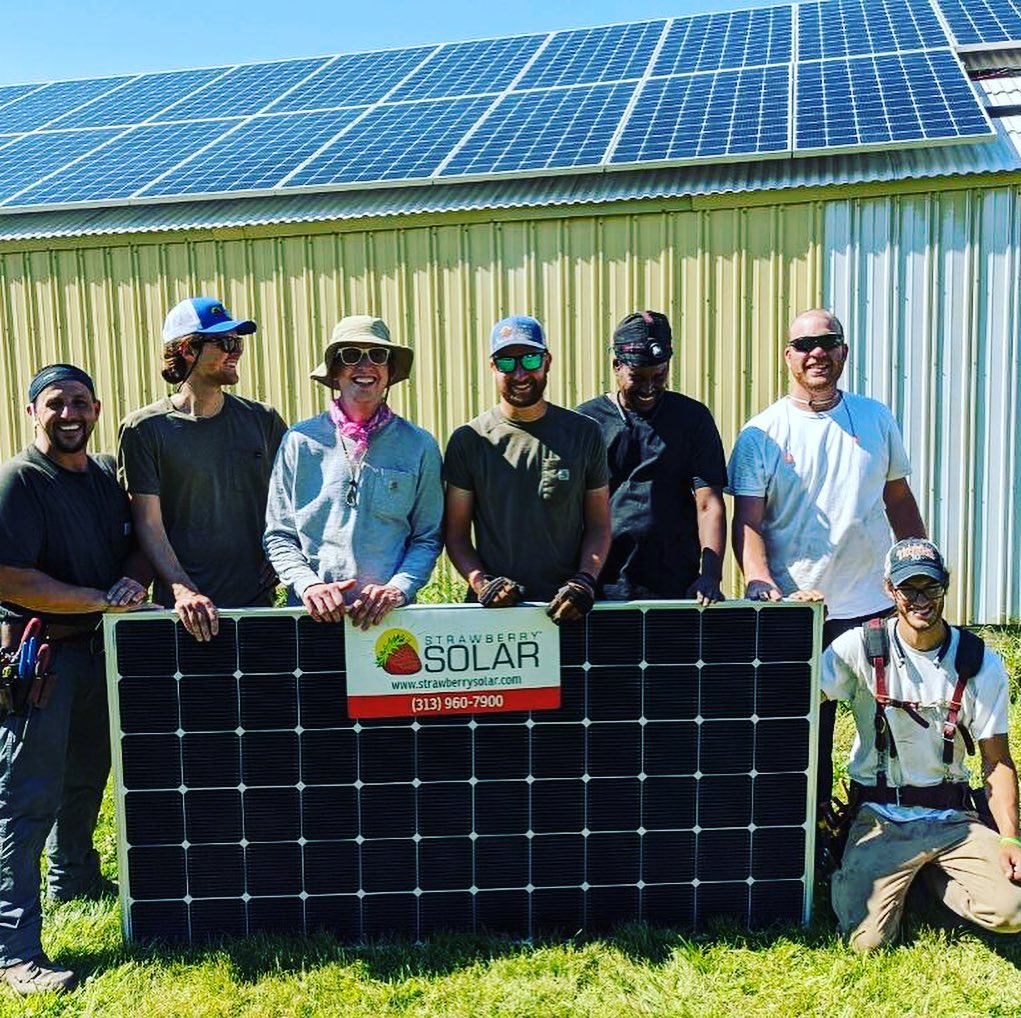
Local Michigan team since 2010. Detroit based, 15 plus years of experience, deep knowledge of DTE and Consumers territory.
Pearl Certified and Michigan Saves authorized. Credentialed and trusted for quality workmanship.
Manufacturer agnostic. We recommend the best fit equipment for your facility, not whatever we are told to sell.
Full turnkey service. Design, permitting, installation, interconnection, monitoring, and support under one roof.
Straight answers on feasibility. If your roof is not ready or the numbers do not work, we will tell you before you spend anything.
We only work with brands we trust and would install on our own homes. We do this to ensure that every customer is satisfied with their solar setup.














Frequently Asked Questions
As early as possible, ideally while the site plan and elevations are still being drawn. Roof orientation and pitch, array location, and electrical sizing are all decisions your architect is already making, and getting them right costs nothing at that stage.
Roof angle and direction, where the array will sit, where vents and chimneys go so they stay clear of it, service and panel capacity, and where equipment like the inverter and any battery will live. Everything else can follow.
Yes. We run conduit, size the electrical, and prep the roof during construction so the array can be added whenever you are ready. That gets the expensive, disruptive work done while it is inexpensive.
We do. Solar permitting, inspections, and interconnection with DTE Energy or Consumers Energy are all part of what we take on, and we coordinate the timing with your build schedule.
We coordinate mounting and flashing directly with your roofing contractor so the roof and the array stay under one conversation rather than two. Specifics depend on your roofer’s terms, and we work that out during the design review.
Yes. Panels operate more efficiently in cold temperatures, and snow typically slides off or melts quickly. We engineer every system for Michigan snow load and seasonal conditions, and on a new build we can plan roof pitch to shed snow rather than hold it.