
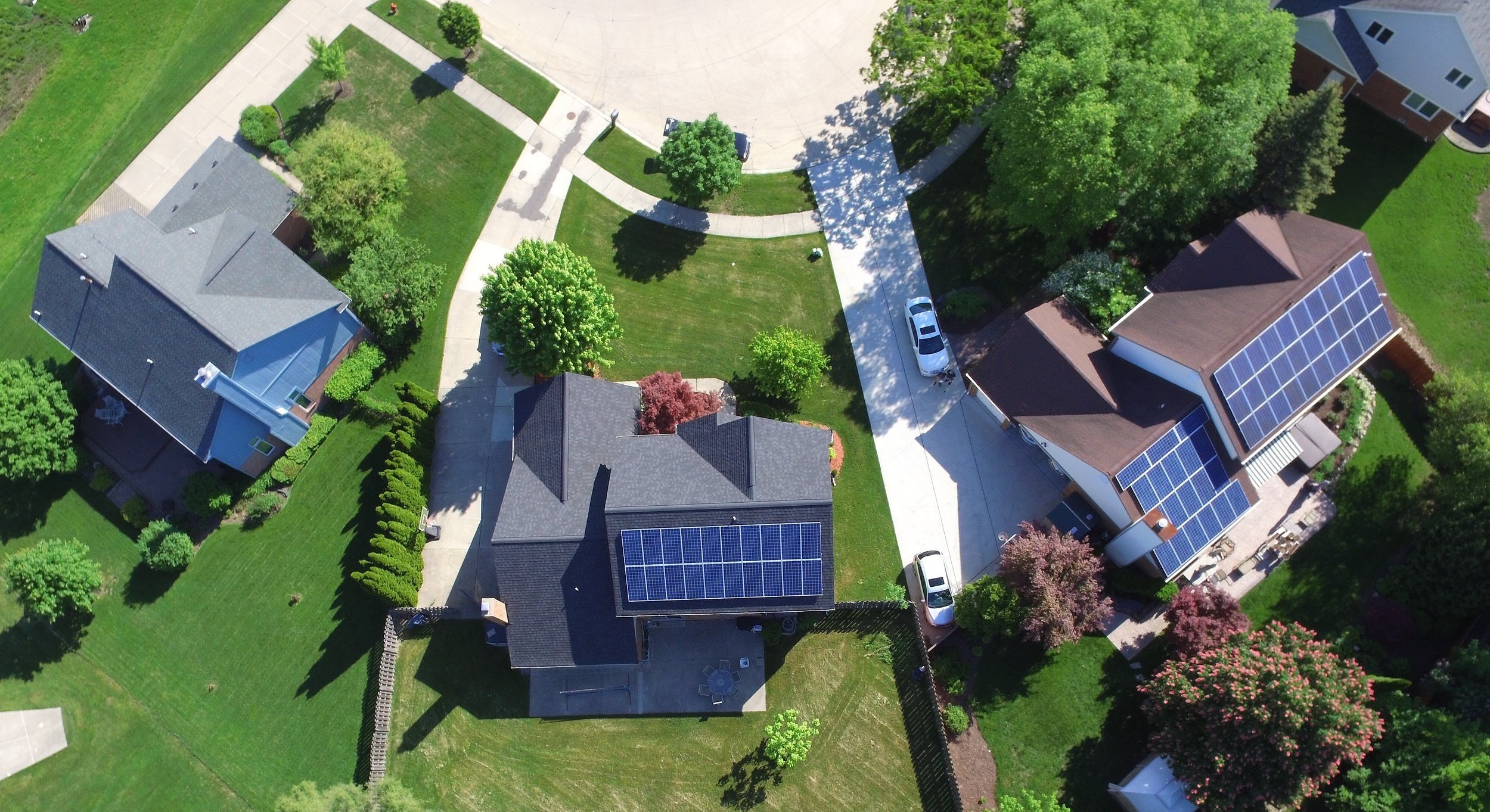

Shingle roofs are the most common roofing material in Michigan, and they’re also among the most compatible with solar installation. The mounting process is straightforward, the hardware is standard, and there’s no special handling required for the roof material itself. Most of what determines whether your home is ready for solar comes down to the condition of your shingles, not the fact that you have them.
Key Points
- Asphalt shingle roofs are the most compatible starting point for solar installation in Michigan
- Panels mount to rafters using lag bolts and flashing – a watertight connection when installed correctly
- Roof condition matters more than age alone, but shingles 15 years or older warrant a closer look before going solar
- Once installed, panels protect the shingles underneath them from UV, rain, and hail
- Permit requirements vary by Michigan municipality and Strawberry Solar handles all permitting on your behalf
Why Shingle Roofs Work Well for Solar
Asphalt shingles give installers a flat, even surface that mounting hardware can attach to cleanly. There’s no fragile material to work around, no proprietary clips, and no need to remove and replace sections of the roof to create mounting points. The crew works directly with the shingle surface, and the hardware used is the same standard racking system that goes on the vast majority of residential roofs across Michigan.
Compare that to other roof types:
- A tile roof installation requires careful handling of fragile material, specialized mounting hardware, and in some cases partial removal of tile to create a clean attachment surface.
- A metal roof has real advantages in terms of lifespan and clamp-based mounting, but it’s a different installation entirely.
- A flat roof solar install or membrane roof uses a ballasted or low-penetration mounting system rather than the rafter-anchored approach used on shingles, and the design considerations are different.
Shingles sit in the middle of the spectrum: no special handling, no added complexity, and no roof-type surcharge on your project. The result is a faster, cleaner installation with fewer variables. If your shingles are in good shape, there’s typically nothing about the roof material itself that complicates the project.
Get Solar on Your Roof
Hundreds of shingle roof installs. Trust the local Michigan Strawberry Solar Team.
How Solar Panels Are Installed on a Shingle Roof
The installation process is consistent across most asphalt shingle home we work on in Michigan. Here’s what it involves.
Roof Assessment First
Before any hardware goes up, our team evaluates the roof. We look at shingle condition, flashing around vents and chimneys, the integrity of the decking beneath, and any signs of water damage or sagging. We also verify that the roof structure can support the additional weight of the panels, which typically runs 2 to 4 pounds per square foot. Shingle roofs handle that load without deck reinforcement in the vast majority of cases.
Orientation, pitch, and shading are factored into the system design at this stage as well. We’re looking at which sections of your roof get the best sun exposure throughout the day and across seasons, and we’re building the array layout around that.
Locating the Rafters
Every mounting point anchors into a rafter, not just the roof decking. This is what gives the system its structural hold – the connection runs through the sheathing and into the framing beneath. Before any drilling happens, the crew maps rafter locations precisely so every lag bolt lands where it needs to.
Lag Bolts and Flashing
A lag bolt is drilled through the shingles at each mounting point, going through the decking and into the rafter below. Once the bolt is in place, flashing is slipped underneath the surrounding shingles at that penetration. The flashing integrates with the existing shingle overlap pattern and directs any water away from the penetration point, the same way the shingles around it manage water.
When this is done correctly, with the bolt hitting the rafter, quality sealant applied, and flashing seated properly beneath the surrounding shingles – it’s a watertight connection. The solar industry has been using this method for decades. A properly installed shingle roof system does not leak.
Rails, Panels, and Electrical Connection
Once the mounting points are set, rails are secured across them. The panels attach to the rails using clamps, and there’s a deliberate gap between the back of the panels and the roof surface to allow airflow. That gap keeps the panels cooler, which helps maintain efficiency. Panels lose a small amount of output as they heat up, and the airflow offsets that.
The electrical side of the project connects the panels to the inverter, which converts the DC power the panels produce into the AC power your home uses. From there, the system ties into your home’s electrical panel and, through the interconnection process, to the grid.
What Your Shingle Roof’s Condition Actually Tells Us
Age is a starting point, not the whole picture. A 12-year-old roof in rough shape is a different situation than a 17-year-old roof that was well maintained. What we’re really looking at is how much useful life the roof has left and whether it makes sense to put a 25 to 30-year solar system on top of it.
The Age Threshold to Know
Asphalt shingles in Michigan typically last 20 to 25 years. If your roof is 15 years old or older, it warrants a closer look before you commit to solar. The reason is straightforward: if your roof needs replacement five years into your system’s life, the panels have to come off first. Removing and reinstalling a typical residential system is something that we can do, but it’s a cost that’s entirely avoidable if you plan for it upfront.
That doesn’t mean a 15-year-old roof automatically rules out going solar. It means the assessment matters more. For the full decision framework on timing a roof replacement alongside a solar project, see our article on whether you need a new roof before installing solar.
This comes up often, and it’s a solvable situation. If your roof is getting close to the end of its useful life, doing both projects at the same time makes financial and logistical sense. One crew mobilization, one project timeline, and one point of contact instead of coordinating two separate contractors.
Many Michigan homeowners finance both the roof and the solar system together through Michigan Saves financing, spreading the cost over the same loan term. That combined approach can make the total investment more manageable than treating them as separate decisions made years apart.
What We’re Actually Looking For
During the roof assessment, here’s what flags a potential issue:
- Missing, curling, or cracked shingles
- Granule loss across large sections of the roof
- Flashing failures around vents, chimneys, or roof valleys
- Soft spots or visible sagging in the decking
- Evidence of active or past water intrusion
If we find something, we’ll tell you. Sometimes minor repairs are all that’s needed before installation moves forward. Other times, replacing the roof first makes more sense financially and practically. We’d rather have that conversation before the project starts than create a problem later.
One Thing Worth Knowing About Panels and Your Shingles
Once the panels are installed, they act as a shield for the shingles beneath them. They block UV exposure, deflect rain, and take the direct impact of hail. The sections of your roof under the array often age more slowly than the exposed sections around them. That doesn’t change what we look for during the assessment. The shingles still need to be in good shape going in, but it’s worth understanding what the long-term picture looks like once the system is up.
Michigan-Specific Factors That Apply to Your Install
Permits and Municipality Variation
Solar installations in Michigan require building permits, and the specifics vary by municipality. What Detroit requires isn’t necessarily what Ann Arbor, Rochester Hills, or Traverse City requires. Permit timelines, inspection requirements, and documentation vary from one jurisdiction to the next.
Strawberry Solar pulls all permits on your behalf. You don’t need to navigate that process on your own, and you don’t need to track down the requirements for your municipality. We manage the permitting from application through inspection as a standard part of every project.
For shingle roof homes specifically, there’s no special permit category. The process is the same standard residential solar permit used for any other roof type in your municipality.
Michigan Climate and Your Shingle Roof
Snow, ice, and freeze-thaw cycles are a reasonable concern for any Michigan homeowner considering roof-mounted solar. The short answer is that the mounting hardware is engineered for these conditions. The lag bolt and rafter connection handles Michigan snow loads without issue, and the flashing system is designed to manage the freeze-thaw movement that affects all roofing components in this climate.
Panels do accumulate snow after a heavy storm. They also tend to self-clear as temperatures fluctuate and the dark panel surface absorbs heat. Most Michigan homeowners find their systems produce more in winter than they expected going in, as cooler temperatures and even indirect light can produce solar energy effectively.
Getting Started with a Shingle Roof in Michigan
If your home has asphalt shingles and you’re thinking about solar, the first step is a site visit. Our team will assess the roof, design a system around your home’s actual sun exposure and energy needs, and give you a clear picture of what the project involves and what it costs. The goal is to make sure you have the right information before you make any decisions.
Experienced Solar Installers for Your Shingle Roof
Reach out today and get started