
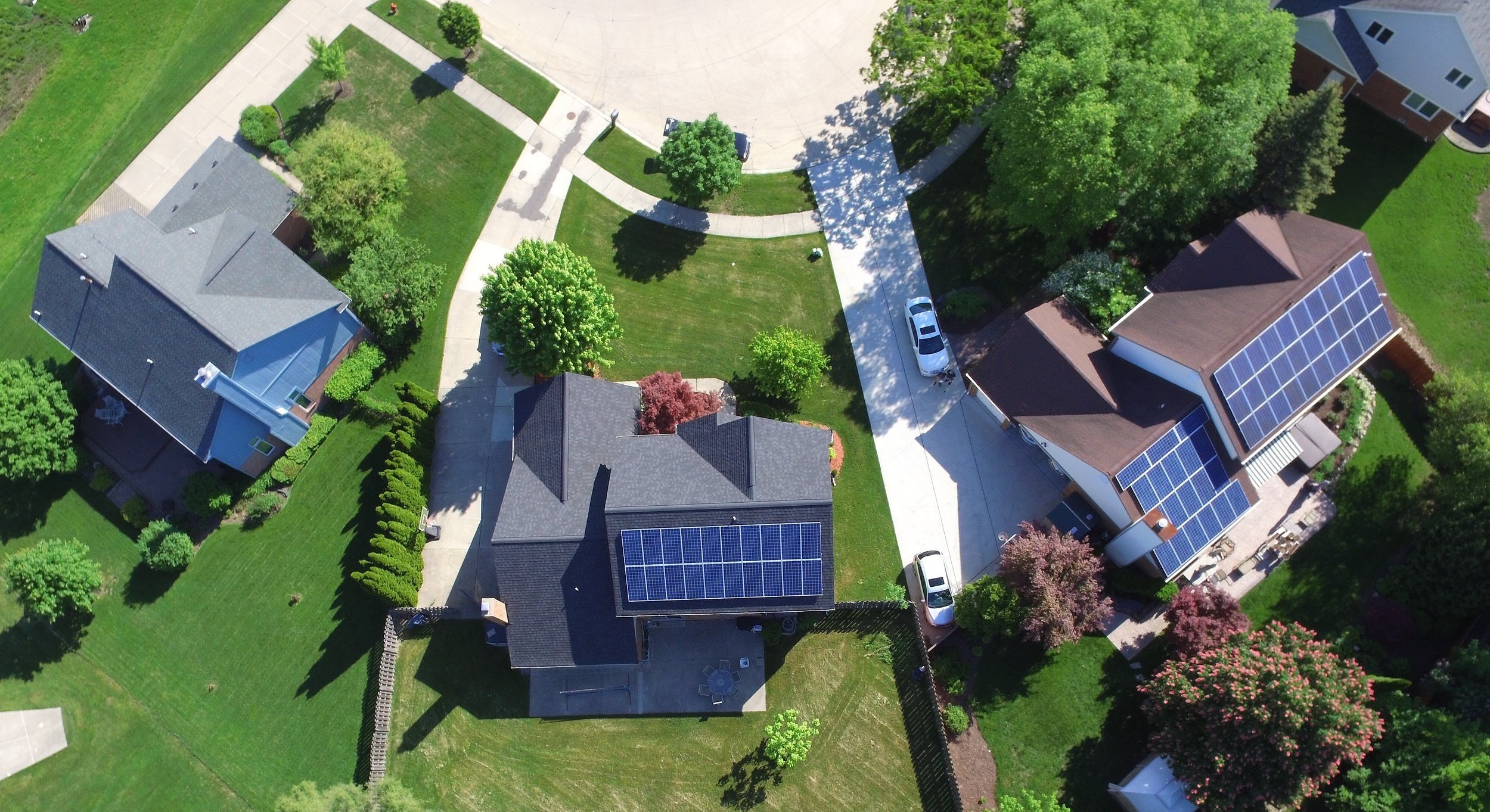

If you have a tile roof and you’ve been putting off the solar conversation because you assumed it would be too complicated, too expensive, or just not possible, we hear that a lot. And we want to set the record straight: tile roofs are not a barrier to going solar. They do require a different installation approach than asphalt shingles, but it’s a well-established process, and our team has done it.
Tile roofs show up on a lot of Michigan homes, particularly in communities like Rochester Hills, Bloomfield Hills, Ann Arbor, and newer custom builds across the Lower Peninsula. If your home has clay, concrete, or Spanish tile, this article walks you through exactly what to expect.
Key Points
- Solar panels can be installed on clay, concrete, and Spanish tile roofs using specialized mounting methods
- Tile roofs require a different installation approach than asphalt shingles, but the process is well-established and common
- The right method depends on your tile type, roof condition, and system design. Strawberry Solar assesses all of this during the site visit
- Tile roofs last 50–75 years, which means most homeowners will never need to reroof during the life of their solar system
- Strawberry Solar handles all permitting and coordinates any roofing-adjacent work the installation requires
Yes, Solar Works on Tile Roofs: Here’s What’s Involved
A tile roof does not disqualify your building from solar. What it does mean is that the installation takes more planning and uses different hardware than a standard asphalt shingle or flat roof job. The crew has to work carefully around fragile tile, use mounting systems designed specifically for tile applications, and make sure every penetration point is properly waterproofed.
None of that is unusual. Solar installers have been working on tile roofs for years, and the mounting technology has improved significantly. The result, when done correctly, is a system that performs just as well as any other roof-mounted installation, with a finished appearance that looks intentional rather than retrofitted.
Get Solar Installed on Your Tile Roof
Strawberry Solar installs solar on tile roofs across Michigan’s Lower Peninsula. If your home has tile and you’re considering solar, we can put together a system design that accounts for your roof type from the start.
Get Started NowWhy Tile Roofs Require a Different Approach
Understanding what makes tile different from asphalt helps explain the installation choices. There are a few specific characteristics that drive the approach.
Tile is fragile underfoot
Clay and concrete tile is durable against weather, but it does not handle foot traffic the same way asphalt shingles do. Walking on tile incorrectly can crack it, and cracked tile leads to leaks. Experienced installation crews know where to step and how to distribute weight to protect the tile during the process. This is one of the reasons a tile roof install is not a DIY project, and why choosing an installer with tile experience matters.
Standard mounting hardware does not work on tile
On an asphalt shingle roof, installers drill lag bolts through the shingles directly into the roof decking and rafters beneath, then seal and flash around each penetration. That approach does not translate cleanly to tile. The tile surface is too rigid and irregular, and drilling through it without the right method risks cracking both the tile and the waterproofing layer underneath. Tile installs require mounting hardware designed specifically for the tile type and profile.
Waterproofing is the critical variable
The layer of roofing felt or synthetic underlayment beneath the tile is what actually keeps water out of your home. Any time a mount is anchored to the roof structure, that penetration has to be properly flashed and sealed against water intrusion. Done correctly, a tile roof solar install is watertight. Cut corners on flashing and you have a leak problem that may not show up until months later and could cause significant damage to your home or business.
Wind can cause long-term cracking if the mount method is wrong
When solar panels are installed above the roof surface, wind passes through the gap between the panels and the tile beneath. That movement creates low-level vibration, and over time, the wrong mounting method can transmit enough of that vibration to crack tile. Proper mounting hardware is designed to absorb and isolate this movement, which is one more reason the choice of mount type and installation method matters.
Installation Methods for Tile Roofs
The right approach for your home depends on the type of tile, the age and condition of the roof, and what the system design calls for. Here are the three methods our team considers using, depending on the project.
Comp-out (inset) installation
Tiles around the installation area are removed and replaced with composite shingles, allowing standard mount hardware to be used.
Tile hook mounts
Specialized hooks slide beneath existing tiles and anchor directly to the roof deck, preserving the tile appearance with minimal disruption.
Tile replacement mounts
Individual tiles are swapped out for purpose-built mounting tiles that integrate seamlessly with the existing roof while providing a solid attachment point for solar panels.
Comp-out (inset) installation
This is the most common method for clay and lightweight tile roofs, and it is the approach we recommend most often for Michigan homes with traditional clay or Spanish tile.
The crew carefully removes the tile in the area where the solar array will sit. These tiles are set aside and protected. Composite shingles are then installed in that cleared section, and the solar racking and panels are mounted directly to the composite shingles, the same mounting method used on a standard asphalt shingle roof. Once the panels are in place, the removed tile is placed back around the array, creating a clean, built-in appearance where the panels look like they were designed into the roof from the start.
The comp-out method eliminates most of the fragility concerns associated with tile installs. The panels are mounted to composite shingles, not tile, so there is no drilling into or through tile, and the risk of vibration-related cracking is greatly reduced.
Tile hook mounts
For flat or S-shaped concrete tile, our team often uses a tile hook approach. Individual tiles are carefully lifted, and a hook with a base plate is anchored to the roof decking and rafters beneath. The hook extends up through the tile plane, and the tile is slid back into place around it. Flashing is installed at each anchor point to maintain the waterproof barrier.
This method is less invasive to the overall tile surface than a comp-out, and it works well when the tile profile is compatible with the hook hardware.
Tile replacement mounts
In some cases, particularly with curved or irregularly shaped tile where hooks are harder to seat properly, the best solution is a tile replacement mount. A single tile at each anchor location is removed and replaced by a purpose-built mount that is shaped and sized to fit in place of the original tile. The mount includes an integrated bracket for attaching the racking system.
The advantage here is that there is no cutting or modifying of surrounding tiles. The replacement mount seats exactly as the original tile did, and the waterproofing is built into the mount itself.
What About the Weight?
Tile is already one of the heavier roofing materials. A home with a tile roof is structurally designed to carry that weight, and in most cases, the additional load from solar panels and racking is well within what the structure can handle.
That said, we do not assume. Before any installation, Strawberry Solar conducts a structural assessment to confirm the roof can support the combined weight of the panels, racking, and anticipated snow load. In Michigan, snow load is a legitimate consideration, and we factor it in as part of the system design.
The good news is that tile roofs tend to perform well in this regard. They are built for durability under heavy conditions, and their smooth surface profile actually helps snow and ice slide off more readily than it would on asphalt. That means your panels are more likely to self-clear after a Michigan snowstorm, which is good for both your roof and your winter energy production.
For more on how roof orientation and pitch affect output, see our guide on best solar panel placement.
Customized Solar Solutions
You can trust in Strawberry Solar’s extensive experience in solar energy system design and installation across a wide variety of property and roof types. Reach out or give us a call today.
Get Started NowShould You Replace Your Tile Roof Before Installing Solar?
If your tile roof is in good shape, this is a straightforward question: solar goes on, and you likely will not need to think about the roof again for decades. Tile roofs have a lifespan of 50 to 75 years. Most homeowners who install solar on a tile roof today will never need to reroof during the life of their solar system, which is a significant advantage.
If the roof has existing damage, missing tile, or is approaching the end of its useful life, it is worth addressing that before the panels go on. Removing and reinstalling a solar system to complete a roof replacement is a real cost, and coordinating both projects at once is considerably more efficient.
Strawberry Solar evaluates roof condition as part of every site visit. If we see something that suggests the roof should be addressed before installation, we will tell you, and we can help you think through the timing. Our goal is a system that performs well for 25 years or more, and that starts with the roof being in good condition.
If you are weighing a roof repair or partial replacement alongside your solar project, our article on whether to get a new roof before solar walks through that decision in more detail.
Permits and Process in Michigan
Tile roof solar installations follow the same permitting process as any other residential solar project in Michigan. Permit requirements vary by municipality, and Strawberry Solar handles all of it on your behalf. You do not need to navigate that on your own.
Where tile installs differ from a standard shingle job is in the coordination required between the solar work and any roofing-adjacent steps. A comp-out installation, for example, involves removing and replacing tile in addition to mounting the solar system. Strawberry Solar manages that as a single integrated project, so you are working with one team and a consistent point of contact throughout.
From your perspective as a property owner, the process looks the same as any other Strawberry Solar installation: site visit, system design, permits pulled, installation scheduled, system commissioned. The additional complexity is on our side of the project.
How Tile Roofs Perform for Solar in Michigan
Tile roofs do not produce solar electricity differently than any other roof type. The panels do the same job regardless of what is underneath them. What the roof type influences is how well the installation holds up over time, how well the roof handles the additional load, and how the finished system looks.
On all three counts, tile roofs are a good platform for solar. They are durable, structurally robust, and built to last. Tile also has good thermal mass, which means the roof surface temperature tends to be more stable on hot summer days, and panels that run slightly cooler hold their efficiency a bit better.
Orientation and pitch still matter most for output in Michigan. A south-facing roof plane at a pitch between 30 and 45 degrees is the target. East and west-facing planes produce meaningfully less, but can still make sense depending on your energy goals and available roof space.
For a detailed breakdown of how shading, orientation, and pitch affect your system, see our article on do solar panels need direct sunlight.
What to Expect When You Work With Strawberry Solar
Our process on a tile roof installation starts with a thorough site visit. We look at your tile type, roof condition, pitch, orientation, and available space before we design anything. That assessment is included at no cost, and it gives us everything we need to put together a system that is right for your roof specifically.
From there, we handle design, permits, and installation. If your install involves a comp-out, our crew manages the tile removal and replacement as part of the process. You are not coordinating between a solar company and a separate roofing contractor. It is one project, managed start to finish by our team.
We have been installing solar in Michigan since 2010. Our crews know how to work on tile roofs without causing damage, and we stand behind the work after the job is done with ongoing monitoring and support.
If you’re ready to see what a tile roof solar installation looks like for your home, get a quote and we’ll put together a system design for you.
Frequently Asked Questions
In most cases, yes. Clay, concrete, and Spanish tile are all compatible with solar installation when the right mounting method is used. Slate tile is more brittle and less common, and each project requires individual assessment. Strawberry Solar evaluates your specific tile type and roof condition before recommending an approach.
It depends on the warranty terms for your specific tile product. Some manufacturers specify installation requirements that, if not followed, can affect warranty coverage. We recommend reviewing your warranty documentation before installation, and our team can help you understand what the install will involve so you can make that determination.
There is a cost premium for tile roof installations, primarily in the form of additional labor. The extra steps involved in working around tile, using specialized mounting hardware, and taking greater care to avoid damage add time to the job. That said, the mounting hardware itself typically accounts for a modest portion of overall system cost. System size, panel selection, and inverter configuration tend to have more influence on the final number than roof type alone.
Our crew takes significant precautions to avoid tile breakage, but it can happen. For comp-out installations, the tiles removed from the array footprint provide a ready supply of matching replacements. For hook or tile replacement mount installs, we recommend sourcing a small stock of matching spare tiles before installation begins. We will discuss this with you as part of the project planning process.
Not really. Solar panels on a tile roof require the same basic maintenance as any other installation: keep them clear of heavy debris and check system monitoring periodically. One thing to be aware of is that if you ever need tile work done on sections of the roof adjacent to or beneath the array, that will require coordinating with us to safely move or temporarily disconnect the system.
Absolutely. Battery storage is independent of roof type. Whether you are adding storage at the time of installation or later, the battery system connects to your inverter and electrical panel, not to the roof.