
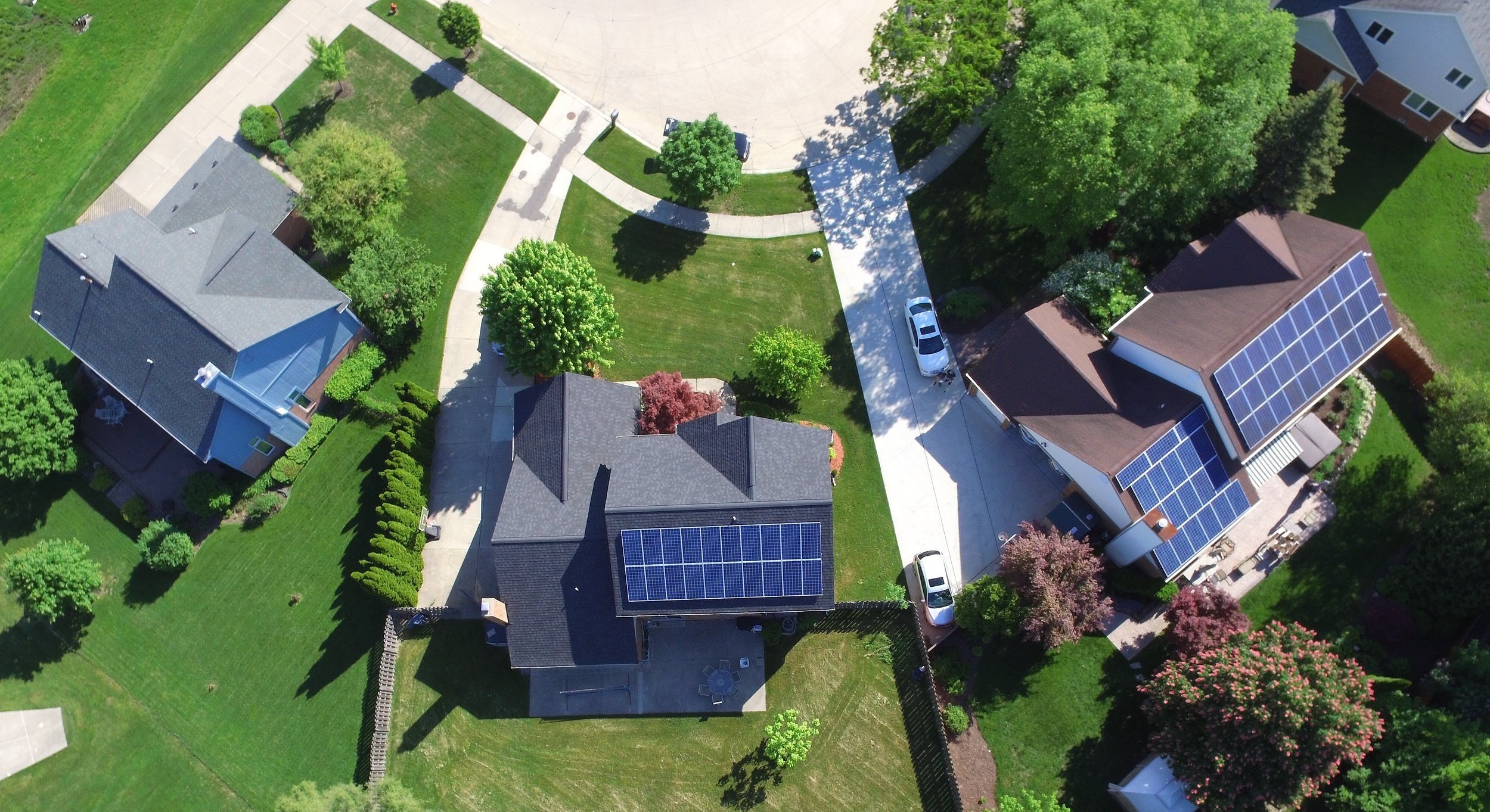

A well-designed solar system in the right conditions often makes more electricity than the home or business under it is actually using. So where does all that extra power go?
That energy doesn’t just disappear. Every watt your panels produce has somewhere to be, and the path it takes depends on how your system is set up. Here is what actually happens to the surplus.
Key Points
- Your panels power your home or business first, then send the rest somewhere useful.
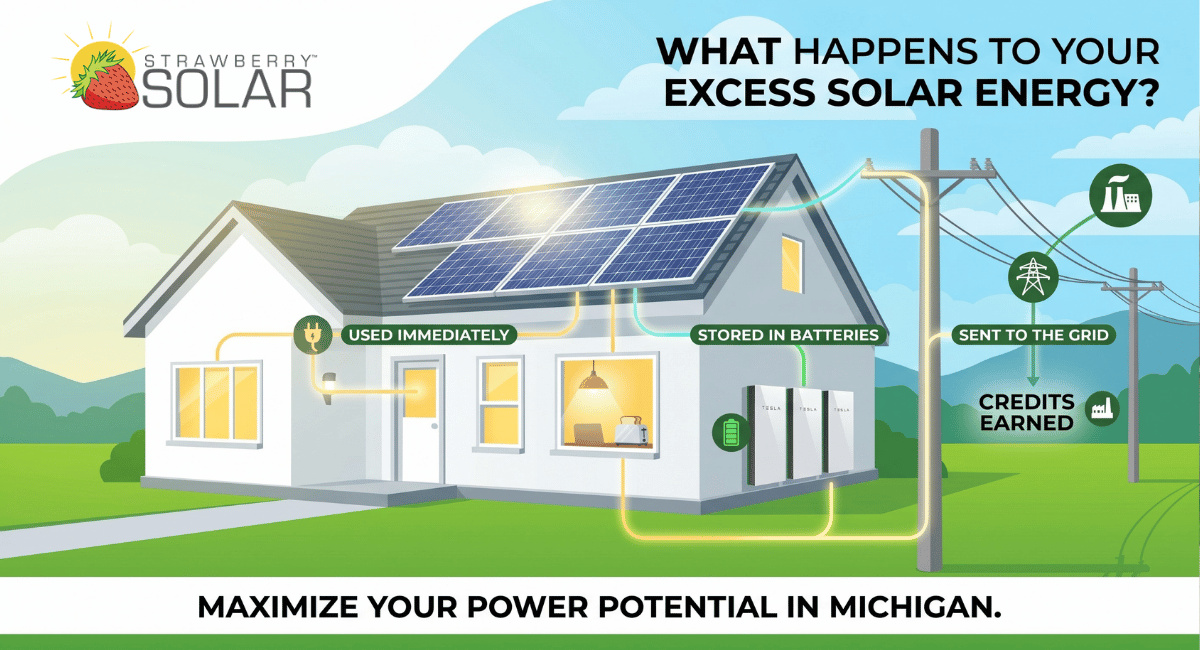
- Extra electricity goes one of three places: used on site, stored in a battery, or sent to the grid.
- Grid-tied systems in Michigan earn bill credits for the power they export through the state’s distributed generation program.
- A battery lets you keep your own surplus instead of sending it out, which matters most when the grid goes down.
- Off-grid systems handle a full battery differently, because there is no grid to absorb the extra.
How Your Solar Panels Make Electricity
Solar panels turn sunlight into direct current (DC) electricity. An inverter then converts that into the alternating current (AC) your lights, appliances, and outlets actually run on. Production rises and falls with the sun, climbing through the morning, peaking around midday, and tapering off toward evening. It also shifts with the seasons, which is why a Michigan system can pour out power on a long July afternoon and make far less on a short, grey day in January. The amount of light your panels get drives the whole thing, and you can read more about that in our look at how much sunlight solar panels need.
That daily and seasonal swing is a primary reason a surplus gets generated in the first place. Most systems are sized to cover a full year of usage, so they run ahead during the sunny months to make up for the lean ones.
Where the Extra Electricity Goes
When your panels make more than the building needs at that moment, the power follows a clear order of priority.
It Powers Your Home or Business First
Your own loads always come first. Anything your panels make is used on site before it goes anywhere else, and this is the most valuable thing solar power can do. Every kilowatt-hour you use directly is one you are not buying back from the utility company.
It Charges a Battery
If you have battery storage within your solar energy system, the next stop for surplus power is the battery. It fills up during the day and hands that energy back in the evening, overnight, or when the grid goes down. For Michigan homes that deal with ice storms and the occasional multi-day outage, that stored power is what keeps the lights and the furnace running. You can see how this works on our solar battery storage page, and we go deeper on resilience in our guide to keeping your power on during an outage.
It Flows Back to the Grid
Whatever is left after your loads are met and your battery is full flows back onto the grid. In Michigan, you earn bill credits for that exported power through the state’s distributed generation program, which replaced traditional net metering. The credit you receive for exported power is lower than the retail rate you pay for it, so the details are worth knowing.
Producing More Energy Than You Use or Store
This is where your setup really matters, because a grid-tied system and an off-grid system handle a surplus in very different ways.
Grid-Tied Systems
If you are connected to the grid, you never run out of room for extra power. Once your home is covered and your battery is full, any additional production simply exports to the grid and earns credits. The grid works like an unlimited overflow, so the energy always goes somewhere.
Off-Grid Systems
An off-grid system has no grid to send extra power to. Once the batteries are full and the loads are satisfied, the charge controller throttles the panels back so they produce only what the system can absorb. Some off-grid setups also send the surplus to a dump load, such as an electric water heater, so it does something useful instead of nothing. None of this harms the panels. They simply make less for a while until the batteries have room again. For the fuller comparison, see our breakdown of grid-tied vs off-grid solar.
Why Solar System Size Matters
All of this is a good reason to size a system around your real usage. A system matched to how you actually use energy spends more of its output powering your own home, where it is worth the most, and less of it exported at a lower credit rate. Our team builds every system around your energy habits, not just the space on your roof.
Michigan’s seasons make the surplus question a real one. A system here can generate well beyond your needs through the long days of late spring and summer, then fall short during the short, cloudy stretch of winter. The credits you bank in the sunny months help offset the power you pull back from the grid when production drops, and a battery smooths out the daily gap between when you make power and when you use it. We design every Michigan system with that yearly rhythm in mind.
If you are weighing solar for your Michigan home or business and want a system designed around your real usage, our team is glad to help.
Expert Designed Solar Energy Systems
Work with the experienced local Strawberry Solar team to design a solar system that maximizes your efficiency and covers your needs without unnecessary excess production.
Get a Free Quote