

Key Takeaways
- Solar panels come in several types, but monocrystalline panels are the most efficient and most commonly recommended for Michigan homes.
- Polycrystalline and thin-film panels are less efficient and typically used only in certain budget or specialty situations.
- Additional technologies like PERC and bifacial panels improve performance and may be beneficial for specific roof types or commercial installations.
- Michigan’s climate, including cold winters and variable sunlight, makes panel efficiency, durability, and temperature coefficient especially important.
- The best type of solar panel for your home depends on your roof size, shading, energy goals, aesthetic preferences, and long-term budget.
How Solar Panel Types Differ
Solar panels differ in how they are manufactured, how efficiently they convert sunlight into electricity, how much roof space they require, and how well they perform in different climates. For Michigan homeowners, these differences matter because of the state’s colder winters, frequent cloud cover, and varied roof designs.
A quick overview of the three most common types:
- Monocrystalline: highest efficiency, longest lifespan.
- Polycrystalline: lower efficiency, rarely used today.
- Thin-film: flexible or lightweight applications, niche use.
The Three Main Types of Solar Panels You’ll See Today
Monocrystalline Solar Panels (Most Efficient and Most Common)
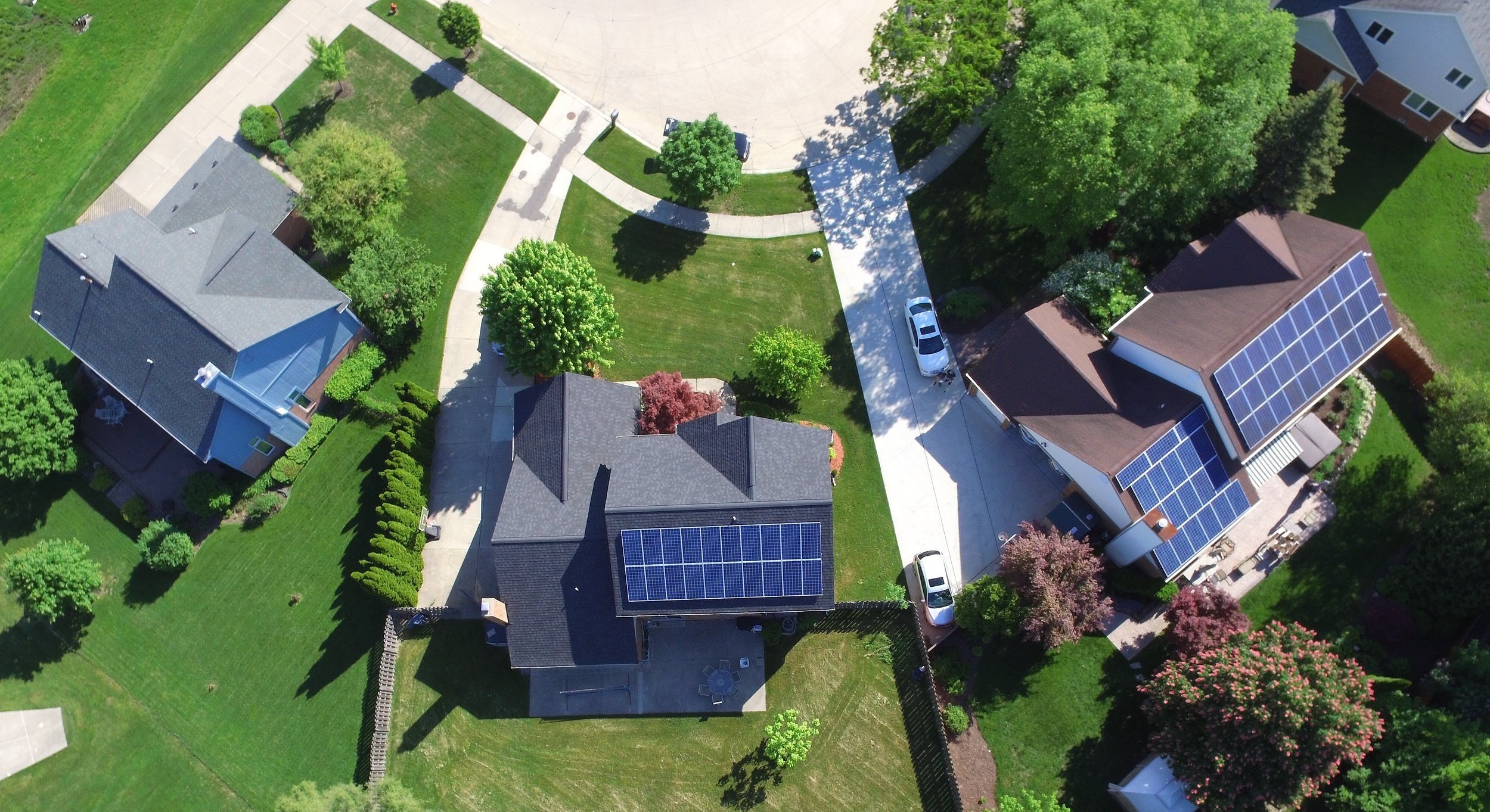
Monocrystalline panels are made from a single crystal structure (similar to those used in modern home solar panel systems), allowing electricity to flow more efficiently. They are the most common choice for Michigan homes because they produce high power even in low-light or cold-weather conditions. These panels also take up less space, making them ideal for roofs with limited surface area.
Monocrystalline panels also offer strong performance during Michigan’s long winter months. Their higher efficiency helps offset shorter daylight hours, and their durable construction tolerates snow load and repeated freeze-thaw cycles. Many manufacturers pair monocrystalline panels with advanced features like PERC cells or half-cut designs, which improve low-light performance and help maintain production during cloudy periods.
These factors make monocrystalline panels a strong long-term investment, especially if you plan to stay in your home for many years.
Pros
- High efficiency
- Strong performance in cold climates
- Long lifespan and reliable warranties
- Sleek black appearance
Cons
- Higher upfront cost
Polycrystalline Solar Panels (Less Common Today)
Polycrystalline panels use multiple silicon crystals, which lowers their efficiency compared to monocrystalline panels. They are typically cheaper upfront but require more roof space to achieve the same power output. Many installers have phased them out for residential use, but they can still make sense in a few specific situations.
When might someone in Michigan consider polycrystalline panels?
- Large, unshaded roofs where space is not an issue.
- Lower-budget projects where keeping upfront costs as low as possible is the priority.
- Certain commercial or agricultural buildings where aesthetics are not a concern.
- Ground-mounted systems with plenty of available land.
Pros
- Lower cost
Cons
- Lower efficiency
- Larger footprint
- Less common in modern residential systems
Thin-Film Solar Panels (Specialized Use Cases)
Thin-film panels are lightweight and flexible, and they work well in specific commercial applications or mobile systems. Because their efficiency is significantly lower, thin-film panels are not typically recommended for Michigan homes.
When might someone in Michigan consider thin-film panels?
- Large commercial roofs where weight limitations matter.
- Curved or irregular surfaces.
- Portable or off-grid setups like RVs or cabins.
- Specialty shading conditions.
Pros
- Lightweight
- Flexible form factor
- Performs better in high temperatures
Cons
- Lower efficiency
- Requires large surface area
- Not ideal for Michigan rooftops
Additional Panel Technologies You May Encounter
PERC Solar Panels
PERC technology improves the efficiency of standard monocrystalline panels and is frequently paired with high‑efficiency residential systems and performs well in low-light conditions.
Bifacial Solar Panels
Bifacial panels generate electricity from both sides. Most common in commercial installations or ground mounts.
Solar Shingles (Integrated Solar Roofing)
More aesthetic but less efficient and more expensive. Snow load must be considered for Michigan.
Emerging Technologies (Transparent, Perovskite, Organic)
Transparent, perovskite, and organic panels remain in early development. They are not currently recommended for Michigan homes due to limited efficiency and durability.
How Michigan Weather Affects Solar Panel Selection
Michigan’s cooler climate can reduce heat-related performance loss, especially for high-quality monocrystalline panels. Homeowners considering residential solar installations should also factor in low‑light performance, but cloudy winters and snow require durable, high-performance modules.
Consider:
- Low-light efficiency
- Snow load durability
- Temperature coefficient
- How quickly snow sheds from the surface
How To Compare Solar Panels for Your Home
- Efficiency: Higher efficiency means more energy production per square foot.
- Cost: Higher-efficiency panels often deliver better long-term value.
- Lifespan and Degradation: Lower degradation rates mean more consistent production over decades.
- Temperature Coefficient: Indicates how much performance declines as temperatures rise.
- Appearance: Monocrystalline panels offer a sleek black look; other types vary.
What Type of Solar Panel Is Best for Your Home?
Recommended Panel Types by Use Case
| Use Case | Recommended Panel Type |
| Smaller roofs | High-efficiency monocrystalline or PERC panels |
| Lower budgets | Standard monocrystalline models with solid warranties |
| Michigan’s climate | Panels with strong low-light performance and high durability ratings |
| Businesses | Bifacial or high-output commercial modules |
Are There Solar Panels to Avoid?
Before looking at specific examples, it helps to understand why certain panel types may not be a good fit. Some older or lower-efficiency technologies cannot deliver Michigan’s needed performance.
- Outdated polycrystalline panels
- Thin-film modules for residential rooftops
- Panels from manufacturers without a long-term track record
FAQs About Solar Panel Types
Which type of solar panel is most efficient?
Monocrystalline panels offer the highest efficiency available for home installations.
Which type lasts the longest?
Monocrystalline panels with strong warranties typically last 25 to 30 years or more.
What type of solar panel is best for Michigan’s climate?
Panels with strong low-light performance and durable construction, such as monocrystalline PERC modules, perform well in Michigan and can be paired with battery storage systems for added resilience.
Can you mix different types of solar panels?
It is not recommended because different electrical characteristics can reduce system performance.
Do solar shingles make sense in Michigan?
They can work, but they are more expensive and less efficient. Snow load should also be considered.
What panel type does Strawberry Solar typically recommend and why?
Strawberry Solar generally recommends high-efficiency monocrystalline panels because they perform well year-round in Michigan’s climate. However, every solar project has its own unique needs. We will work with you to explore options and determine the best path forward for you.